11 cuts, colors, and textures defining fall 2026 – from the ripped bob and butterfly cut taking over salon chairs to the warm color shift that’s finally retiring icy platinum for good.
Fall 2026 is the season hair stopped playing it safe. After two years of cool-toned blondes, sleek minimalism, and quiet luxury doing most of the heavy lifting, the pendulum is swinging back toward warmth, texture, and personality – in both cuts and color. Refinery29 put it plainly: “If 2025 was the year of the bob, 2026 is the year the pixie cut steals the spotlight back.”
But the bob didn’t go anywhere. It just got considerably more interesting.
Celebrity stylist Nick Stenson named the ripped bob “the standout cut of winter 2026,” while colorists are retiring icy platinum in favor of honey, chestnut, and copper tones that look like they belong to someone who went outside this summer. The appointments filling up fastest this fall share two things: texture and warmth.
Both of which, for the record, have been missing for about three years too long.
The Ripped / Textured Bob
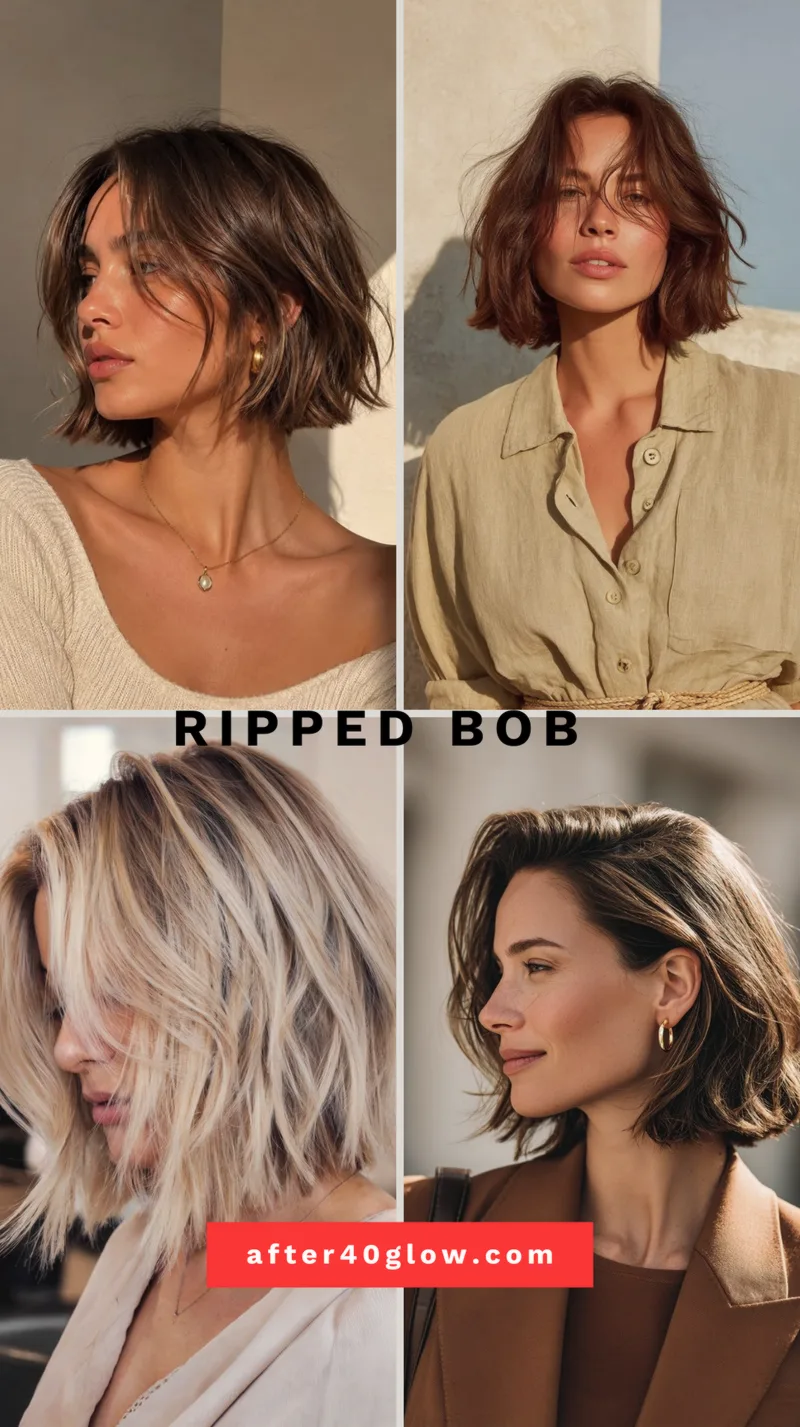
A cleaner, more refined alternative to the standard blunt bob – the ripped bob uses vertical texturizing cuts that softly separate the ends rather than leaving them uniform or smooth. Nick Stenson said it in Refinery29: “Bobs are making a comeback because their clean, structured shape pairs perfectly with cold-weather layers,” and this version adds just enough edge to keep it from feeling predictable.
The ends look intentionally undone without ever looking unkempt – which is a harder balance to achieve than it sounds.
Best on medium-to-thick hair where the separation between ends has enough material to work with. Pairs exceptionally well with fall turtlenecks and structured coats, where the contrast between clean clothing and softly ripped ends creates exactly the right visual tension.
One appointment. Completely different bob.
Butterfly Cut 2.0
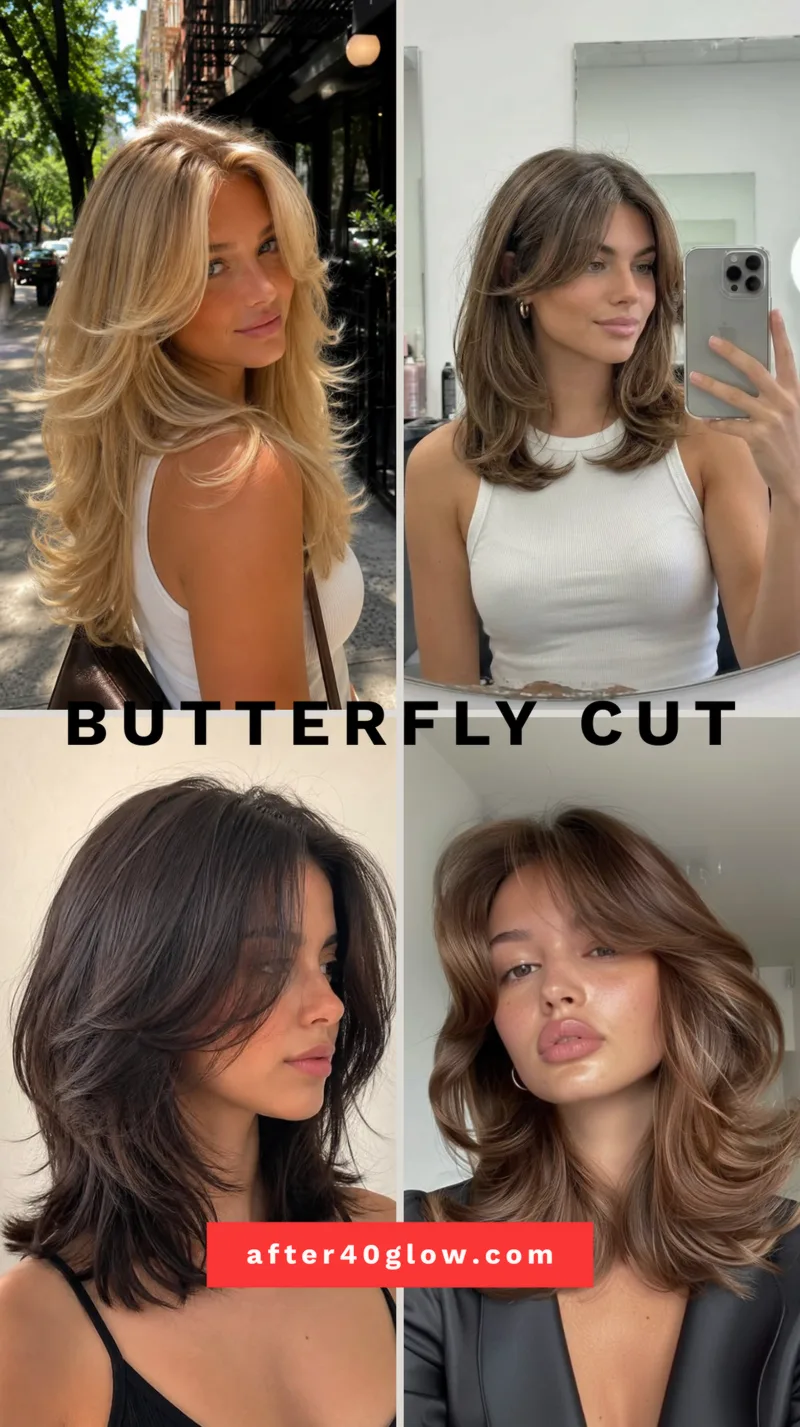
The longer, softer, more refined evolution of the wolf cut – and the one that photographs significantly better. Face-framing layers placed specifically to accentuate the cheekbones and jawline, creating a contouring effect that Cindy Duplantis (Olaplex Pro Collective) described in Fashion Magazine as “bringing in layers to accentuate the cheekbones or jawline.” Sabrina Carpenter’s bombshell blowout is essentially the butterfly cut at peak performance.
The face-framing adapts to your actual face shape – a good stylist isn’t following a template here, they’re solving a specific problem.
Works beautifully air-dried for a relaxed everyday version, and transforms entirely with a round brush blowout for something closer to that pop-star reference. The butterfly cut has a high ceiling for how good it can look – and most people haven’t reached it yet.
Book this one with someone who genuinely understands layers.
The Pixie Revival
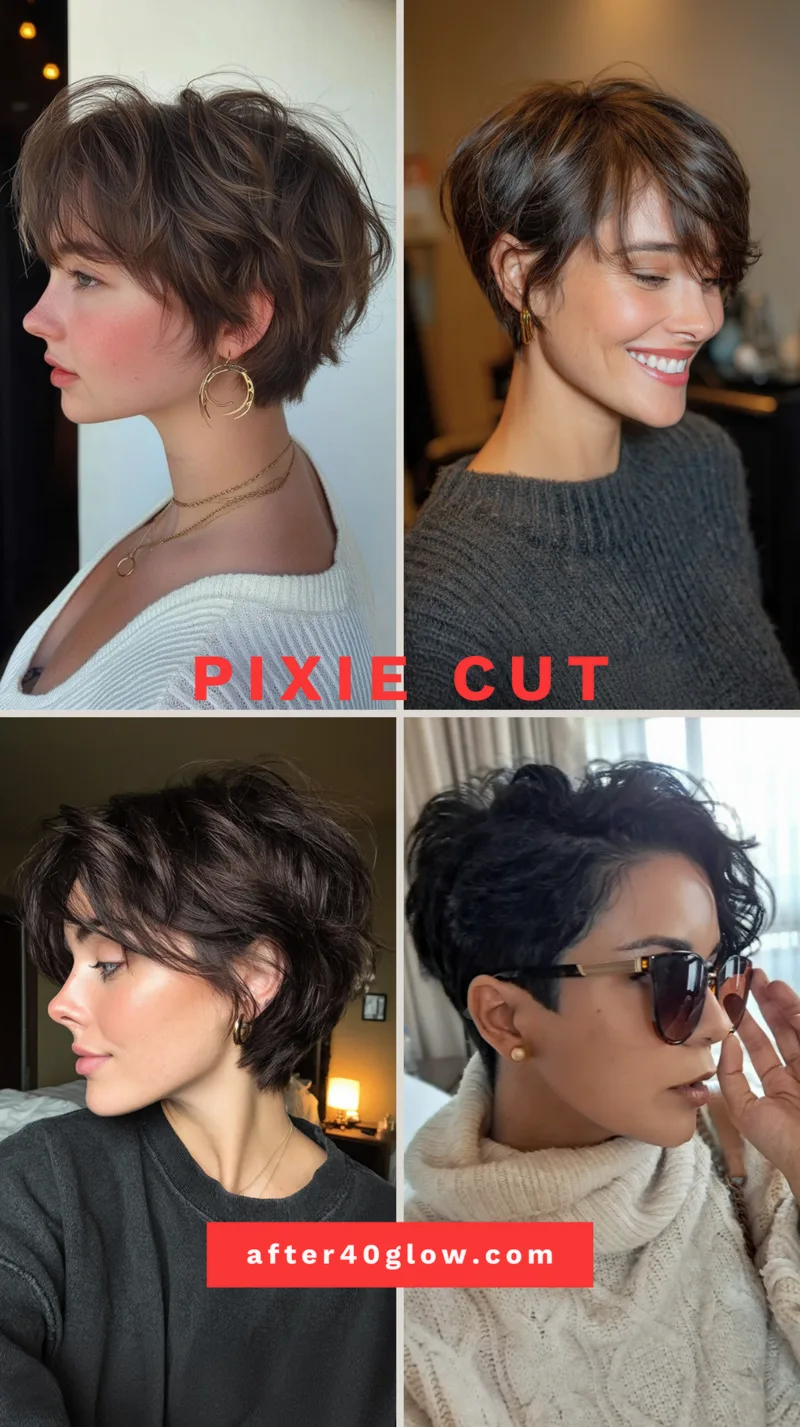
Refinery29 declared it plainly: “If 2025 was the year of the bob, 2026 is the year the pixie cut steals the spotlight back.” The fall runways confirmed it – short, precise, polished in a way that moves the pixie away from its edgy connotations and firmly into something fashion-forward and genuinely low-maintenance. The sleek pixie is having a specific moment: close-cropped, smooth, structured enough to pair with fall’s more architectural fashion direction.
Counterintuitively, the pixie is the cut that requires the least styling time of anything on this list.
Pairs well with the season’s emphasis on strong outerwear and structured silhouettes – when the coat is doing a lot, a clean, uncluttered haircut makes the whole look sharper rather than busier. Also worth knowing: a pixie grows out into a bixie (number five) beautifully, which makes the commitment feel considerably more manageable than it used to.
The most decisive thing you can do with your hair this fall.
Jawline Bob
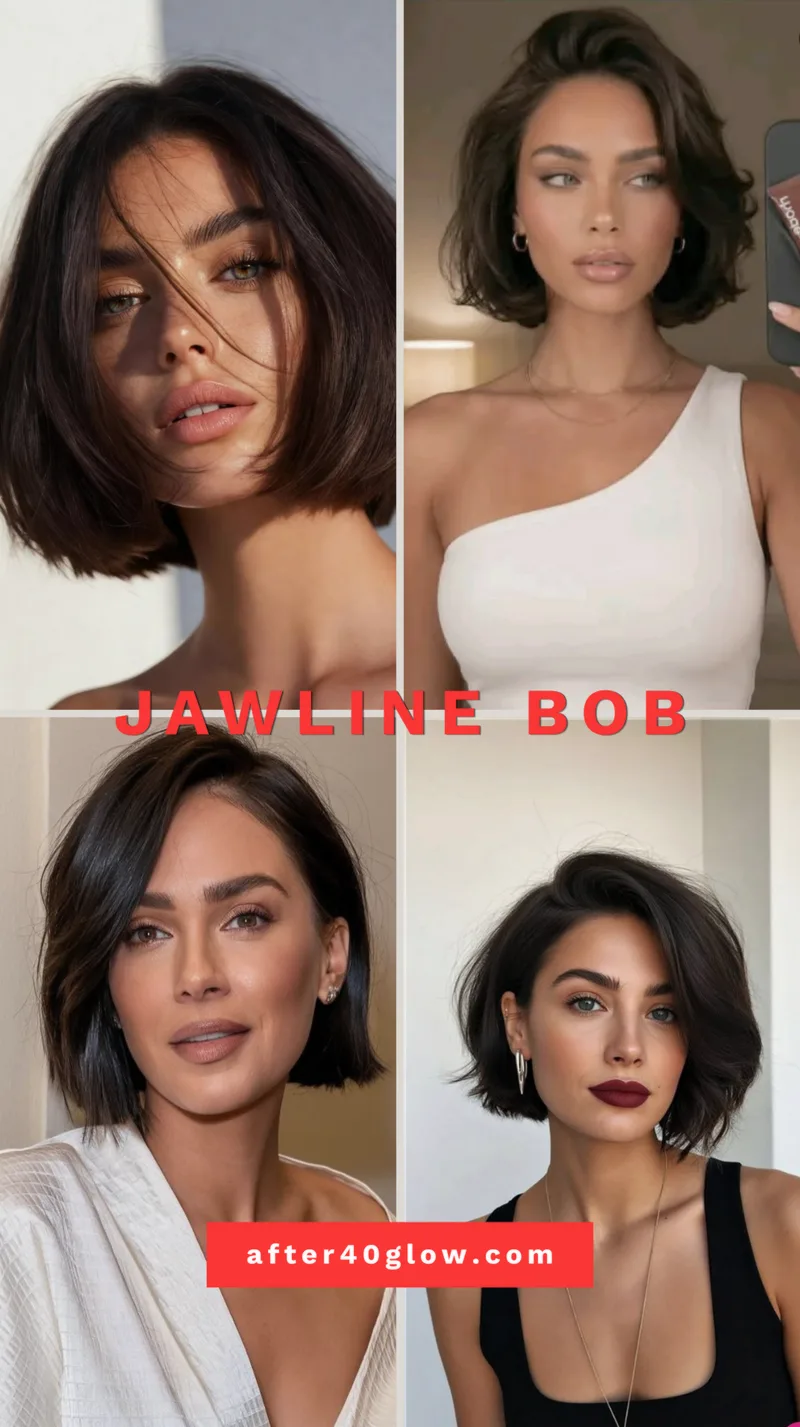
Sharp, precise, and landing at exactly the right length to create a clean graphic silhouette without sacrificing softness entirely. The jawline bob had a significant moment at fall 2026 fashion week – Bella Hadid’s graduated version became one of the most referenced salon requests of the season – and the reason it resonates is simple proportional logic: a cut ending at the jaw draws attention upward to the face in a way that longer lengths never quite manage.
It reads structured enough for fall’s more formal, layered dressing, and relaxed enough to wear on a Saturday.
The version worth requesting has a slight internal curve inward at the ends – this is what gives it that swing when you move rather than falling flat. Best on thicker, denser hair where the bluntness of the cut has enough material to read as deliberate.
The haircut for the person who wants structure and knows it.
Shoulder-Grazing Lob with Invisible Layers
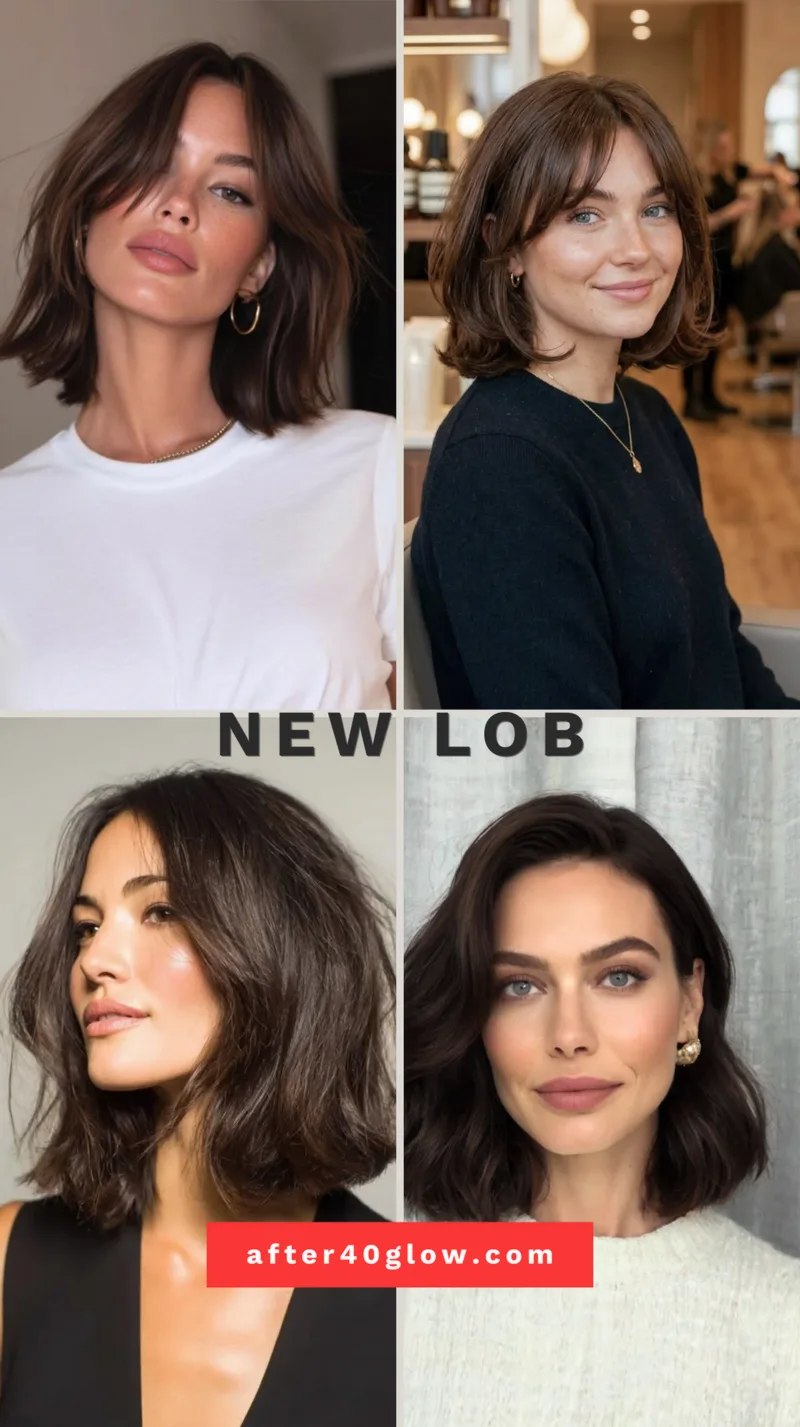
The lob evolved, and the best fall 2026 version lives in what stylists are calling the “magic zone” – just above the collarbone, never shorter than the jawline. The difference from every previous lob is what’s happening underneath: “invisible layering – subtle, sliced-in shorter pieces hidden underneath” that, as Refinery29 reported, “act like built-in movement, allowing the bob to swing, breathe, and catch the light in all the right ways.”
The invisible layers give this lob a life of its own that standard lob versions have never managed.
This is the length that holds a blowout longest, takes waves and braids equally well, and works with warm autumn color – caramel balayage and chestnut tones at shoulder length are among the most requested looks in salons right now.
The fall haircut for people who want everything and aren’t willing to compromise on any of it.
The Cowgirl Cut
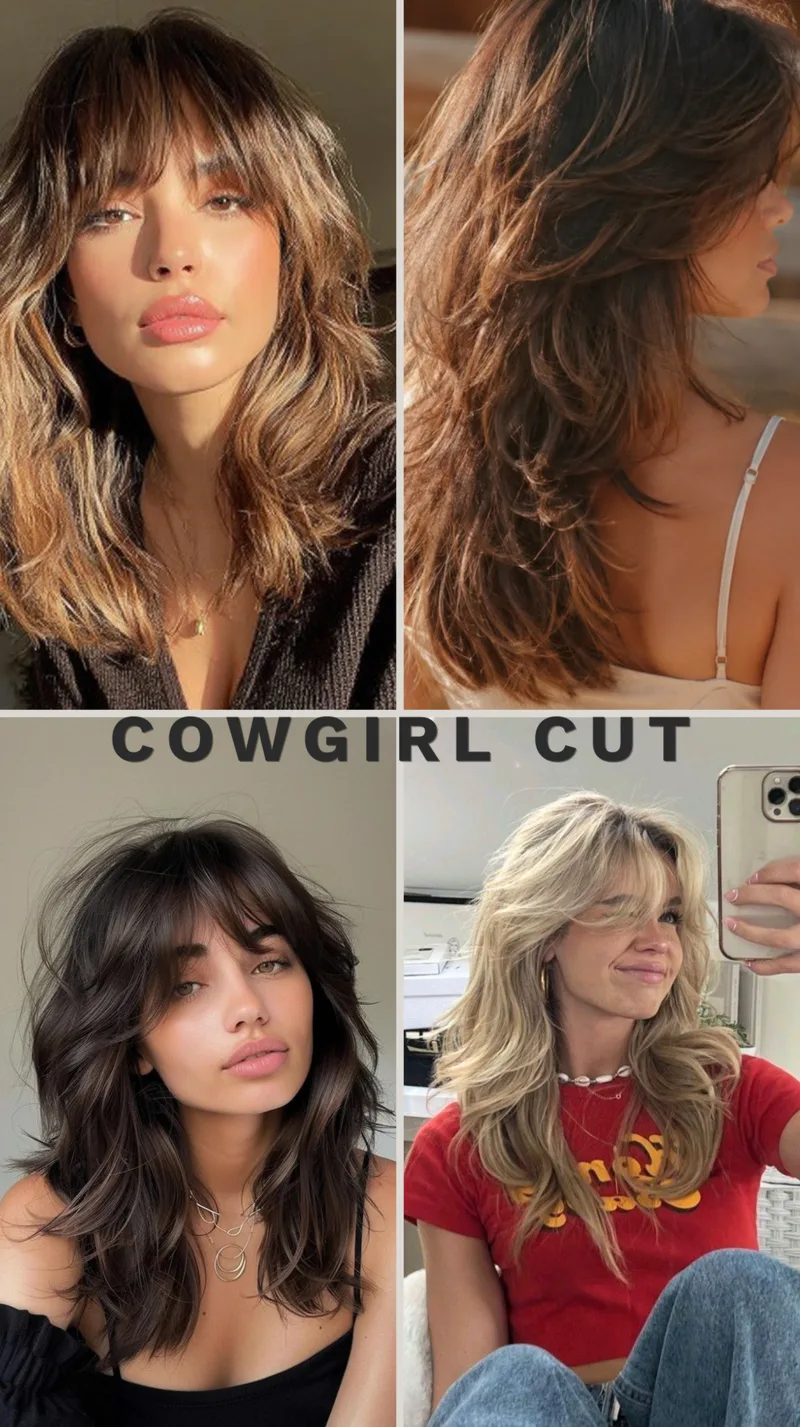
Butterfly layers meeting a mullet-inspired shape, producing something that manages to be edgy and romantic at the same time – a tonal balance that is genuinely difficult to achieve in a haircut. The cowgirl cut appeared consistently in 2026 editorial coverage precisely because it doesn’t belong cleanly to any one aesthetic: too soft for the standard mullet crowd, too structured for the standard shag crowd. Face-framing butterfly layers in the front create softness and volume, while the longer, slightly disconnected back gives the whole thing its shape.
The cut that makes people ask who does your hair – in exactly the way you want them to ask.
Works best on oval and heart face shapes where the front framing has something to work with, and on hair with natural movement that gives the longer back layers dimension. A texturizing product through the ends keeps everything from going flat by midafternoon.
The haircut for the person who has been waiting for something that doesn’t quite exist yet.
Color Melting
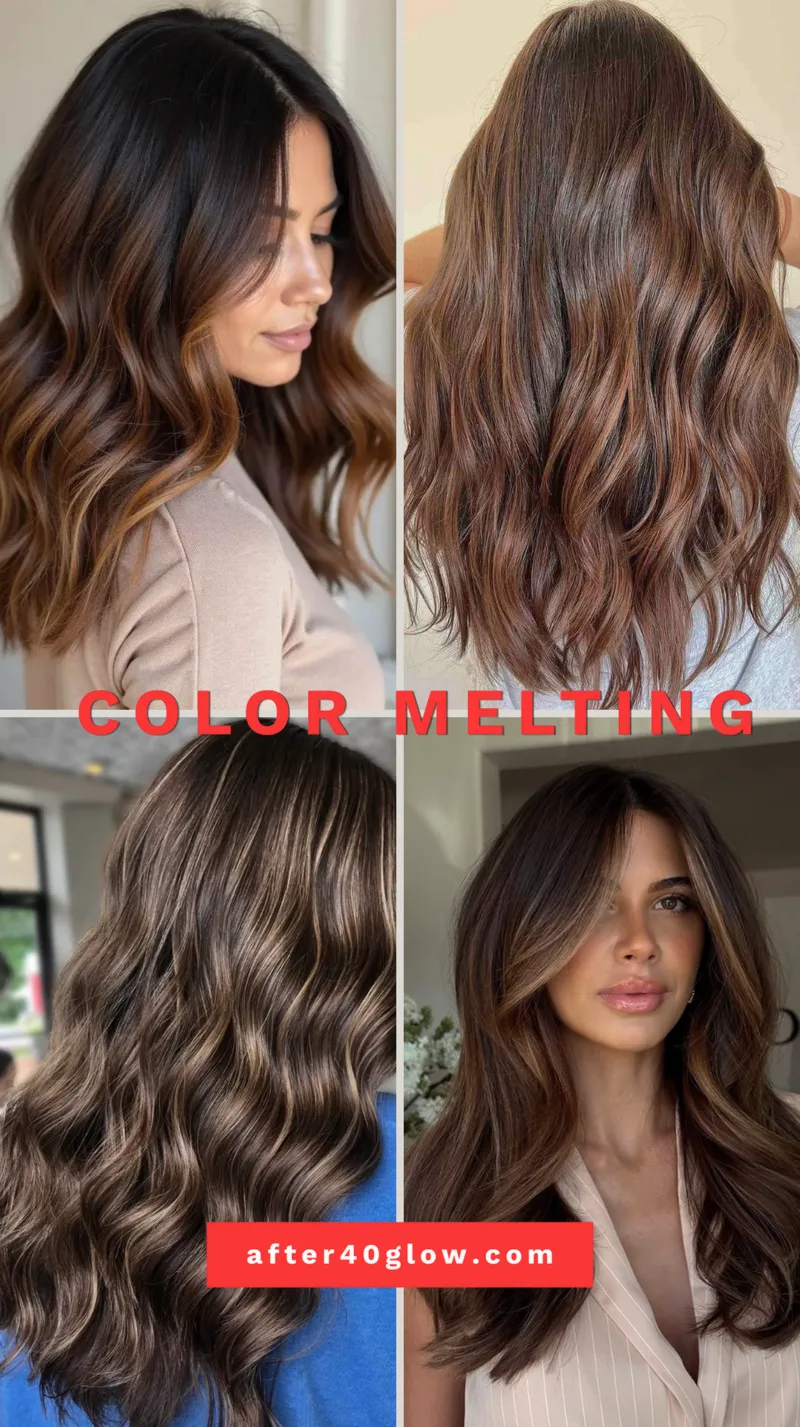
Named by Malibu C as 2026’s biggest color trend, and the technique colorists are using to replace balayage for clients who want dimension without visible contrast. Two or three shades blended so precisely that the transition between them disappears entirely – darker at the roots, lighter through the mid-lengths and ends, physically worked together where they meet. The result looks liquid rather than highlighted, which is a more accurate description than it sounds.
Unlike balayage, where contrast is part of the design, color melting is specifically about eliminating the contrast entirely.
Grows out beautifully because the roots blend naturally rather than creating a visible line of demarcation – which means longer intervals between appointments and less corrective work overall. For fall, the most-requested version is a chestnut-to-auburn melt that deepens gradually from root to end.
Book this once and you’ll be explaining what you did differently for months.
Warm Blonde (Honey, Vanilla, Wheat Tones)
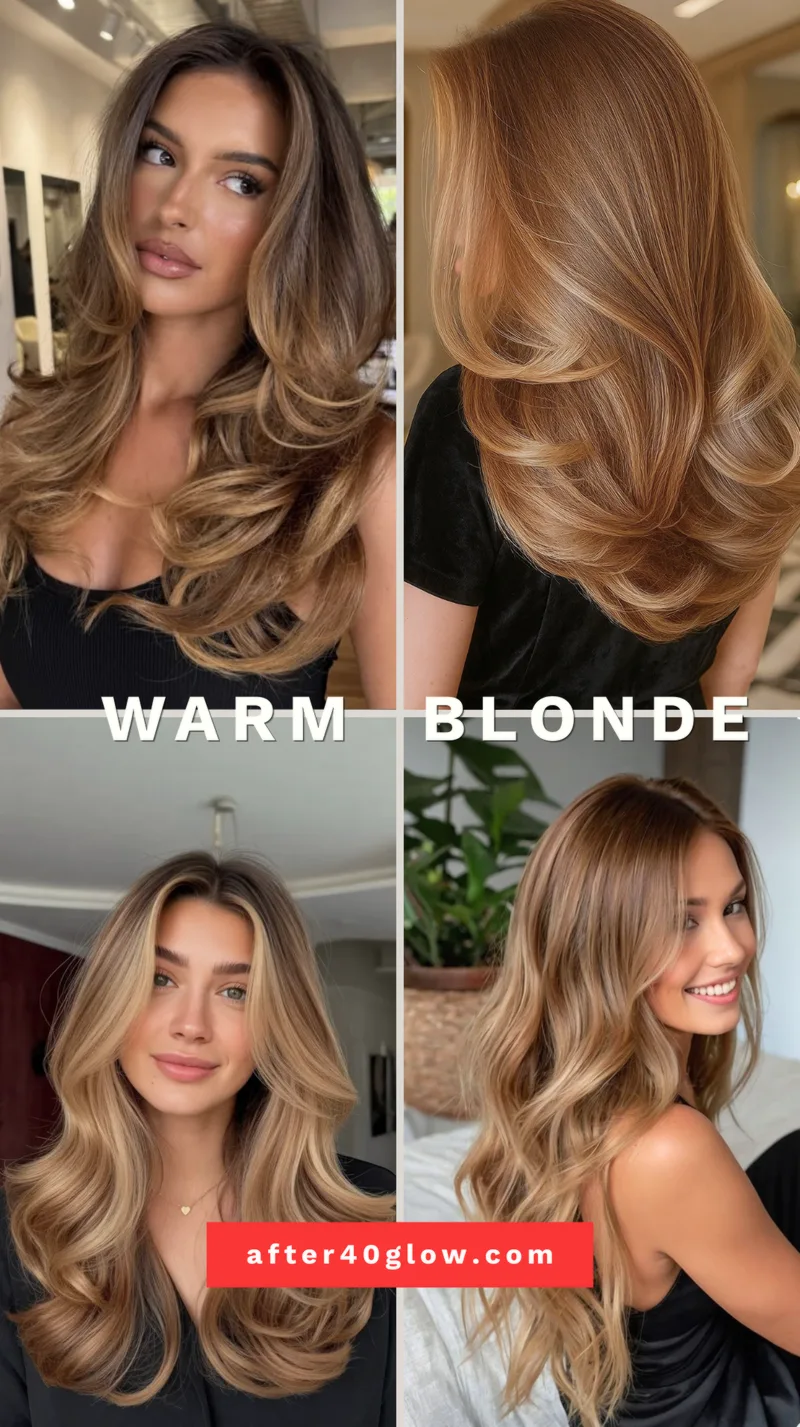
The departure from icy platinum and ash blonde that has been building all year is now fully committed for fall 2026. Malibu C’s trend report described warm blondes – honey, wheat, vanilla – that “mimic sun-kissed, beachy vibes” as replacing the cooler, higher-maintenance options that dominated the previous two years. Vanilla blonde specifically (a creamy shade sitting between vanilla and beige, neither too cool nor too golden) is the version showing up most consistently across editorial references and salon request sheets.
These tones grow out beautifully, blending with natural roots rather than creating the visible line that icy shades demand you maintain.
The practical case is as strong as the aesthetic one: warm blondes require fewer appointments, less purple toning, and less corrective work when the color shifts. The fall case is even stronger – warm blonde against camel, rust, and burgundy clothing creates a cohesion that cool blonde simply cannot deliver.
The color for people who are tired of sitting in the salon chair every six weeks.
Rich Warm Color (Chestnut, Deep Auburn, Copper)
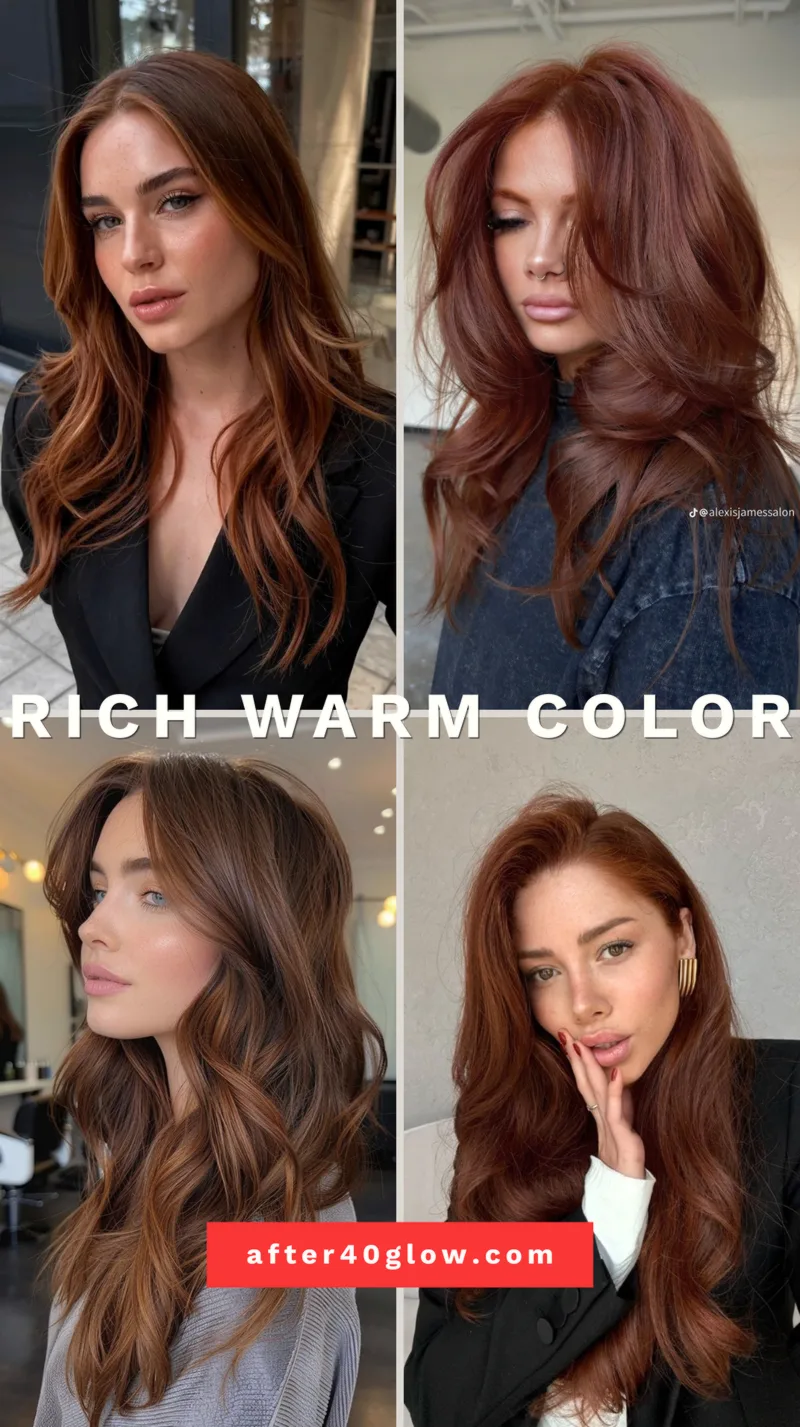
The color story of fall 2026 hair mirrors the nail palette, the fashion palette, and the makeup counter exactly: warmth is back, and it’s more saturated than last year. Chestnut brown, deep auburn, and rich copper are dominating salon color conversations, described across multiple 2026 trend reports as the most-requested shift for clients moving away from both icy blonde and flat brunette. The defining characteristic across all three is depth – color that changes between light sources and catches warmth in autumn light in a way cooler tones simply don’t.
The hair equivalent of the cognac brown nail, the camel coat, and the mahogany manicure – all from the same warm, saturated fall palette.
Deep auburn in particular has a specific editorial moment this season, referenced consistently as the shade that photographs most dramatically against fall foliage, rust clothing, and candlelit interiors. For existing brunettes, the shift toward any of these three requires less work than expected – a gloss treatment or a single color appointment in most cases.
The most seasonally correct thing you can do with your hair between now and December.
The Rich Girl Blowout
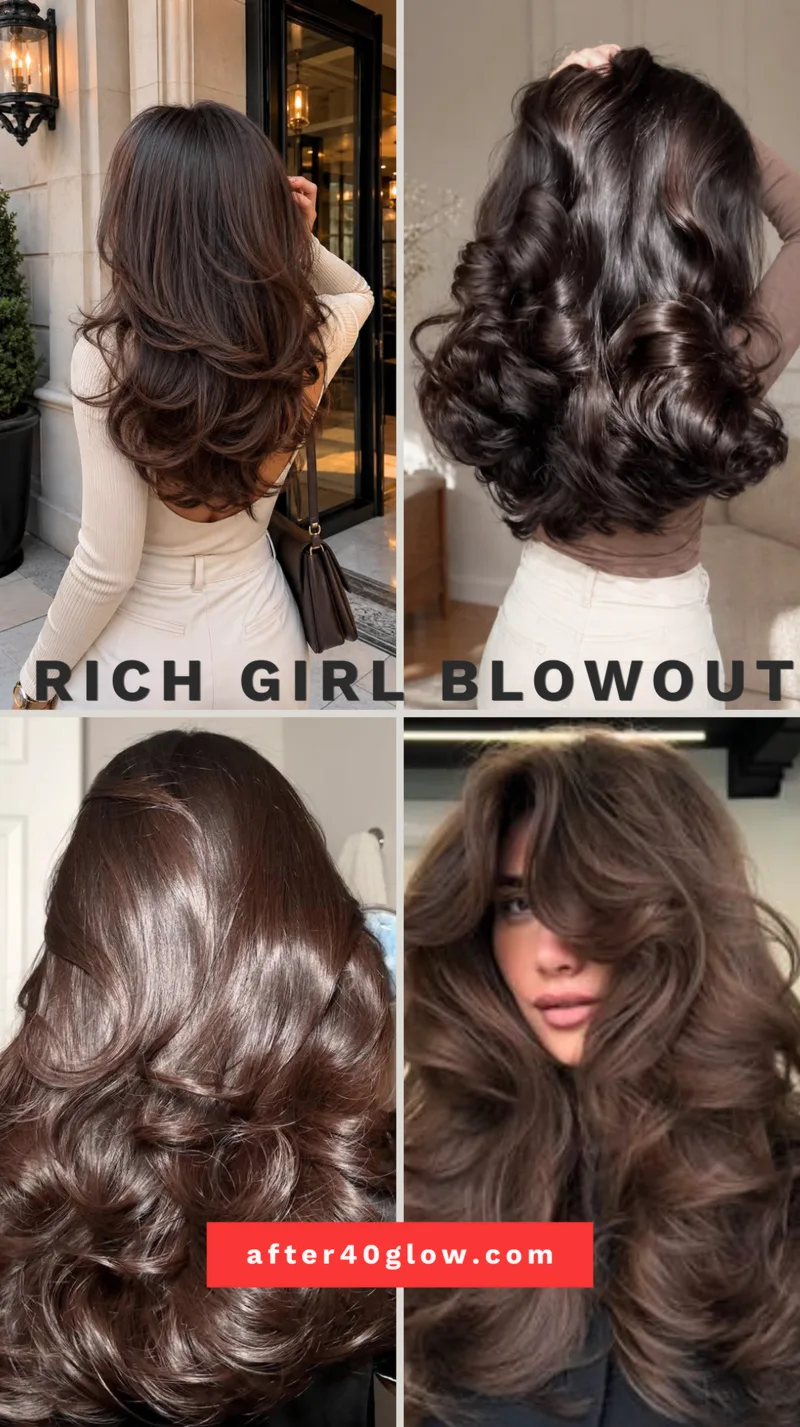
Glass hair is what happens when a blowout is executed so well the hair catches light like fabric rather than like hair – smooth, reflective, falling in one continuous surface from root to end with no flyaways, no texture, no visible evidence of effort. The fall version is having a specific moment because it pairs so well with warm color – a honey blonde or deep chestnut in a glass finish is one of the better things you can show up wearing in October, and it photographs in candlelit interiors in a way that no other styling method quite replicates.
The “rich girl” qualifier is doing real work here: this is a blowout that looks like someone did it for you, even when you did it yourself.
Requires genuinely healthy hair to work (damage and glass finish are incompatible in practice), a smoothing serum applied to damp hair before blow-drying, and the patience to section properly rather than rushing through it. The investment is in the condition of the hair – get that right and the blowout follows without effort.
The most expensive-looking thing you can do without changing a single thing about your cut or color.
Sculpted Waves / Baroque Bob
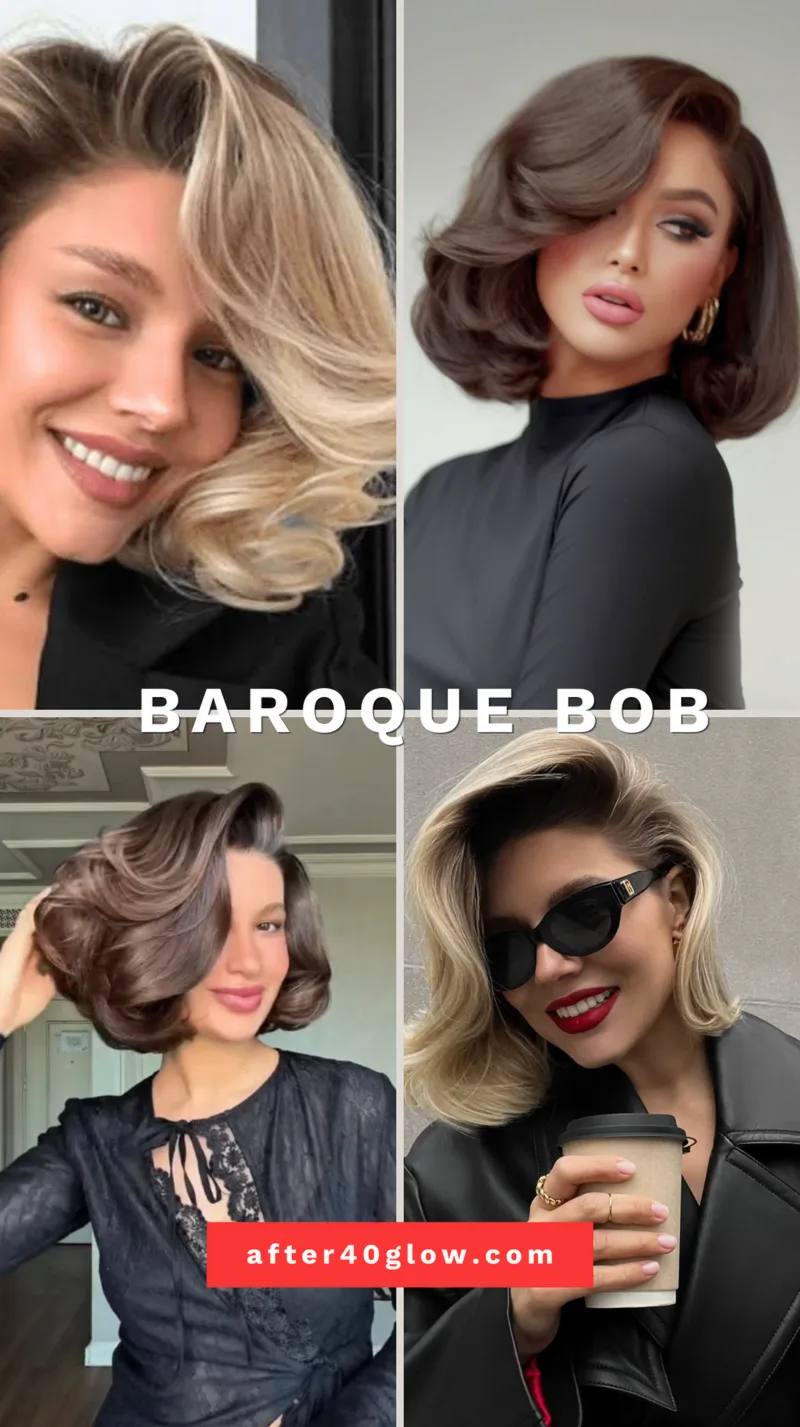
Old Hollywood glamour came back to fall 2026 in a version that reads as editorial rather than nostalgic – sculpted waves on a bob length, structured enough to feel intentional, soft enough to avoid the stiffness of its predecessors. Ayo Edebiri and Selena Gomez both wore dramatic sculpted bobs at the Golden Globes, and Gomez’s longtime hairstylist Renato Compora broke down the technique in Fashion Magazine: a curling iron and firm-hold foam, which is a more achievable combination than the result implies.
The Baroque Bob delivers volume, structure, and movement in a way most haircuts only manage on one styling day out of seven.
Best on bob lengths where the wave has a defined shape to follow, and on hair with enough density to hold the curl through a full evening. This is the fall haircut for occasions – specifically the ones where you want your hair to be doing something.
The version that photographs the best at dinners, events, and everything in between.
The Deep Side Part
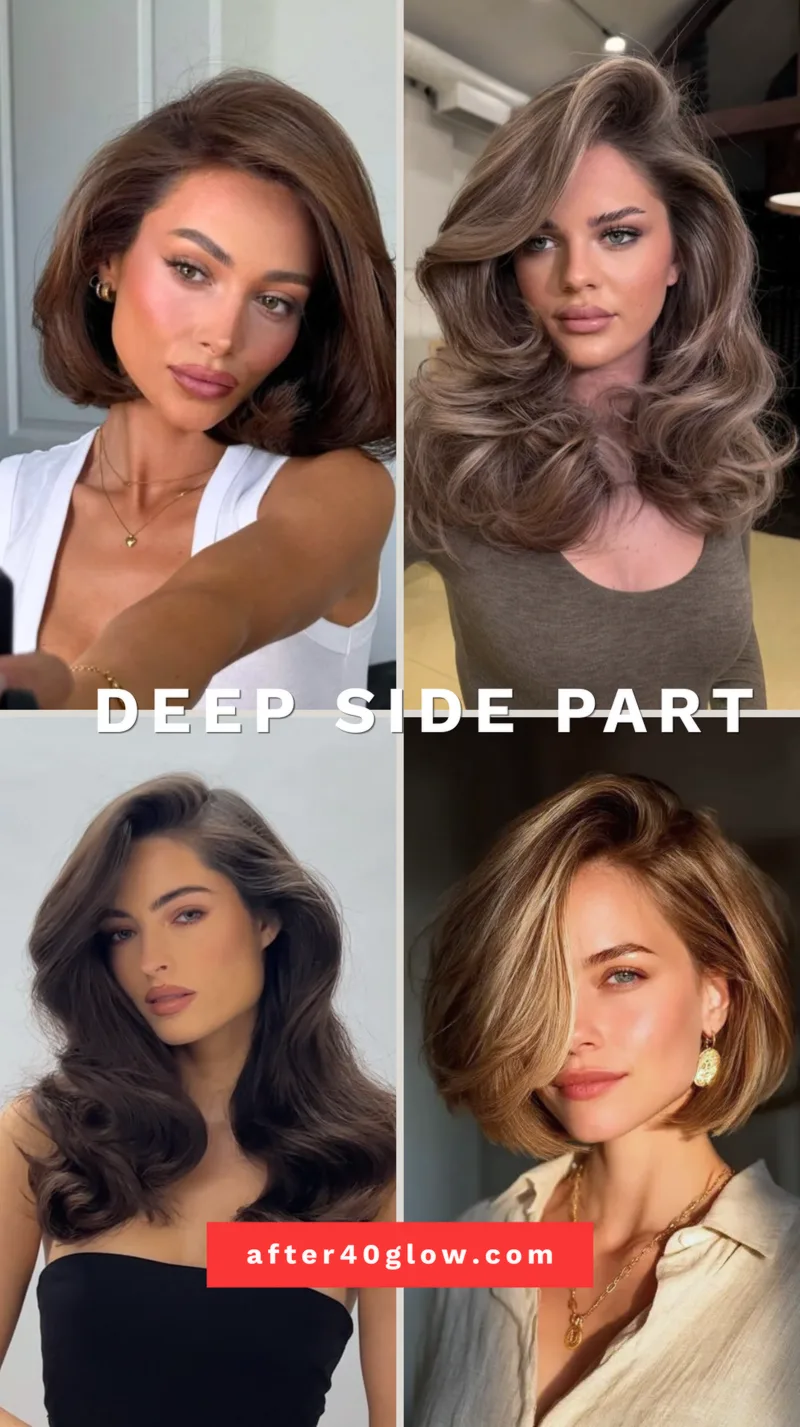
The deep, hard side part has been building as a directional counterpoint to the center-part dominance of the last four years, and fall 2026 is the season it arrives with enough momentum to be genuinely worth switching for. It changes the entire silhouette of a haircut – a bob with a hard side part reads completely differently from the same bob with a center part – without touching a single strand of the cut itself. The effect is more mature, more editorial, and more interesting than the center part allows for, which is a significant amount of work for something that costs nothing.
The deep part creates volume on the heavier side that frames rather than flattens, particularly effective on shorter and mid-length cuts.
Requires a fine-tooth comb and a light-hold product through the root to set the direction and keep it there, and looks best when the rest of the hair stays clean and polished rather than textured or undone. The hard side part and the undone romantic look are essentially opposites – pick the one that matches the rest of what you’re doing.
One styling decision, completely different haircut. Worth trying before you book anything new.
That’s twelve cuts, colors, and textures worth knowing before your next appointment. Fall hair is warm, textured, and done with the restraint of the past few seasons – which was long overdue. Pick one, send it to your stylist, and let them do the rest.
With love,
Sofi